A named hero for your own force
Your homebrew captain, your warband's leader, the character from your campaign notes. Draw or commission one concept image, and print a model nobody else on the table has.
Use case · Tabletop wargaming
3 free credits on sign-up — enough for one textured model. No card.
Upload one sketch, render or photo of your design and the Snapshapy agent builds a textured 3D model in 4–7 minutes, then a print mesh at 28–32 mm heroic scale for your resin printer. The first model is free; STL export comes with a paid plan.
3 At a glance
Hobbyists don't use a generator to replace a box of troops. They use it for the one model the range doesn't have.
Your homebrew captain, your warband's leader, the character from your campaign notes. Draw or commission one concept image, and print a model nobody else on the table has.
A model that stands in for a unit entry in friendly games, built around your army's look. Agree it with your opponent first, the same as any proxy.
A custom head, a trophy rack, a banner top or a weapon to glue onto a plastic kit. Make the part as its own model and print several at once.
A beast for a narrative game, an objective marker, a ruined pillar or a shrine. Terrain is forgiving: no faces, wide bases, easy prints.
Ten minutes with the agent and the slicer. Step three is the one wargamers get wrong: scale.
Use the box at the top of this page. A sketch, a digital painting or a photo of a converted model; one figure, plain background, full body in frame.
The agent builds it in 4–7 minutes for 3 credits. Turn it round; if the backpack, cloak or weapon is off, say what and run it again.
Type "printable at 32 mm to the eyes, base 32 mm round, thicken the weapon". Remeshing is free.
Download the STL and open it in Lychee or Chitubox. Tilt it, add light supports on the weapon and medium ones under the base. Preview it first in the free STL viewer if you like.
Wash and cure, glue it to a base, prime, and paint with the colour model on screen as your scheme guide.
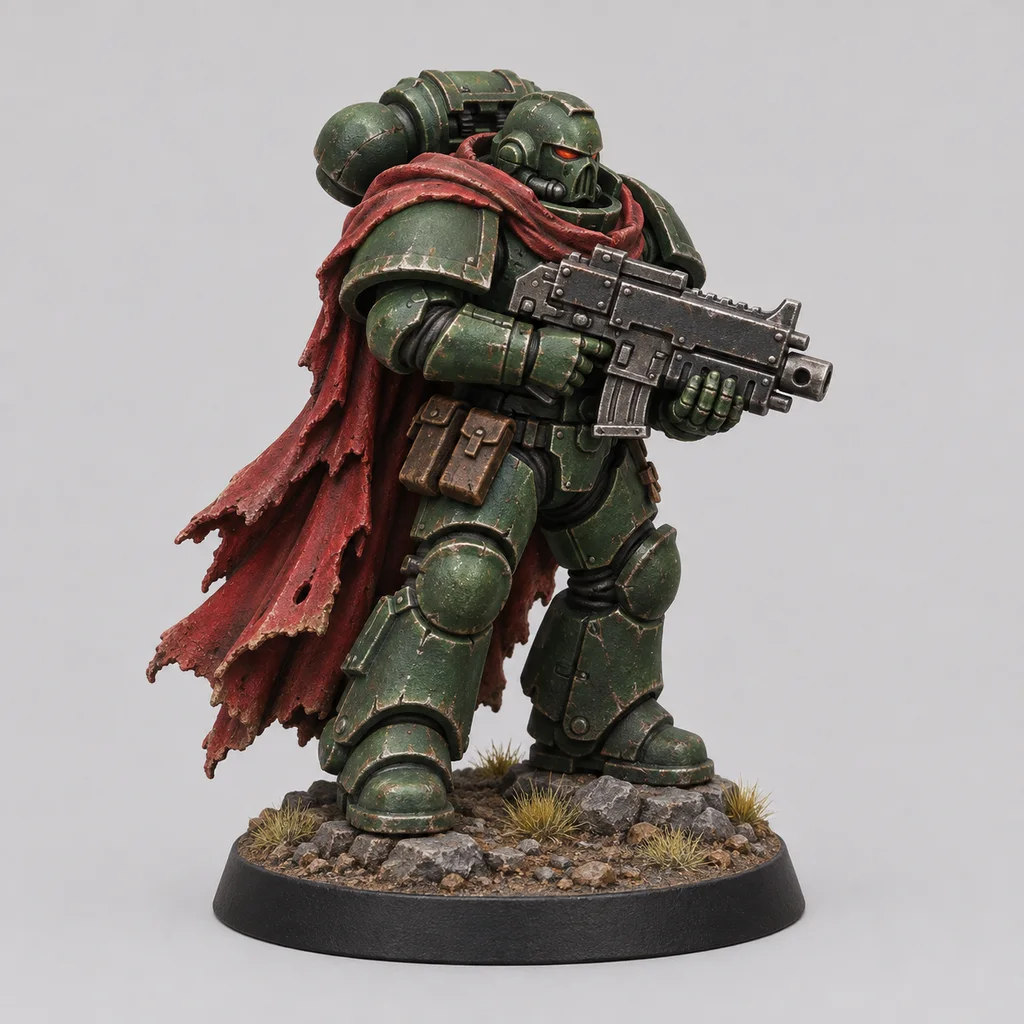
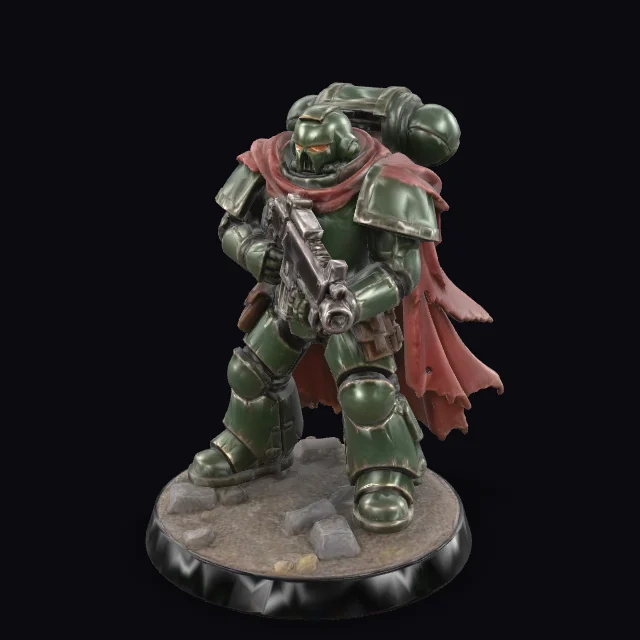
Each one started as a single image and came out of the same pipeline you use. All three made for this page are original designs, not copies of any official range.
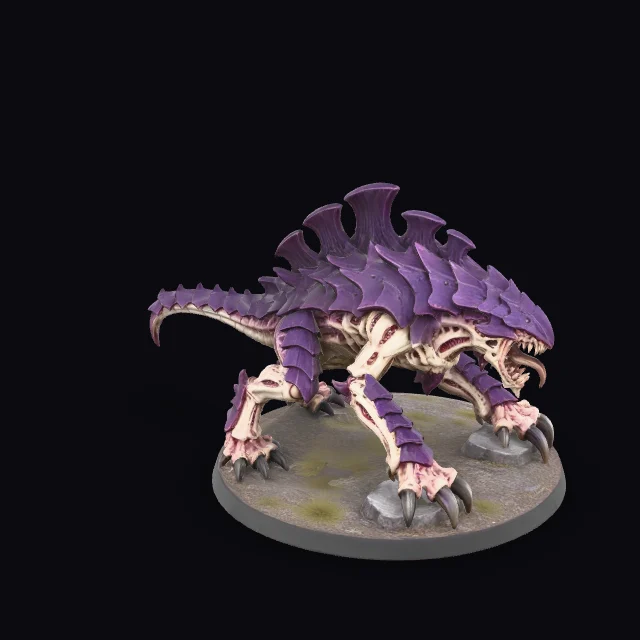
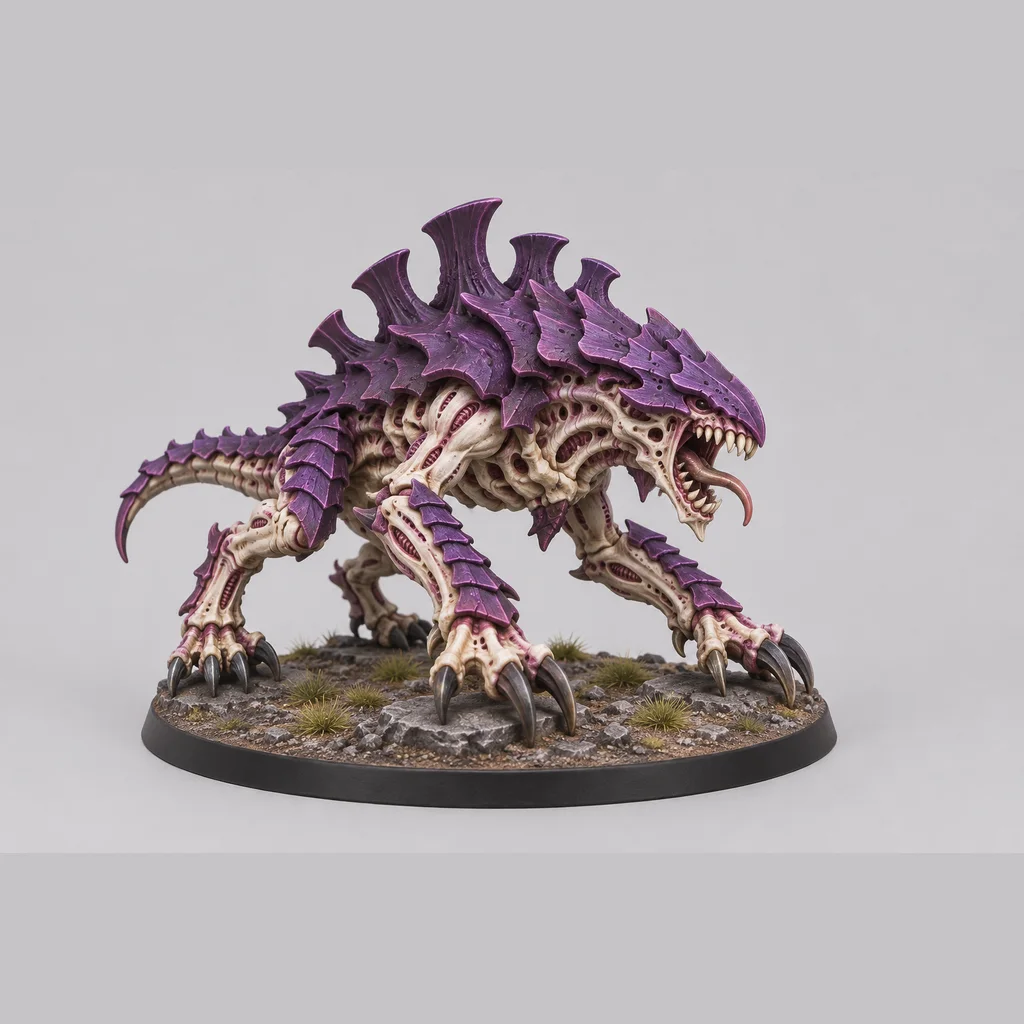
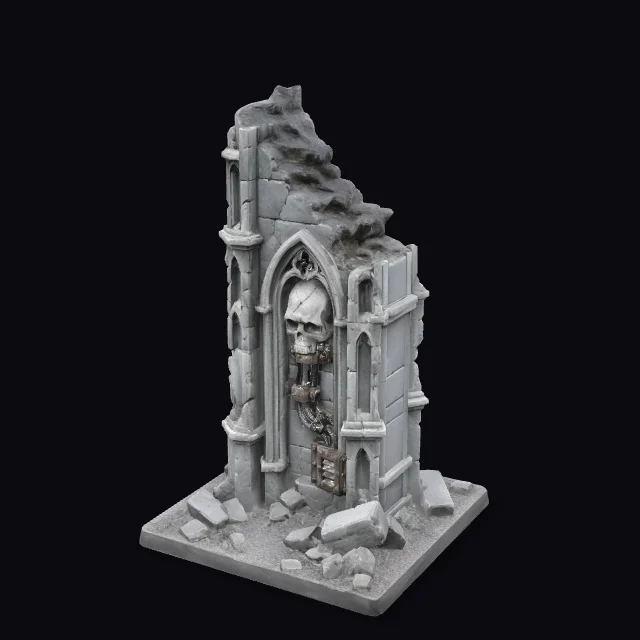
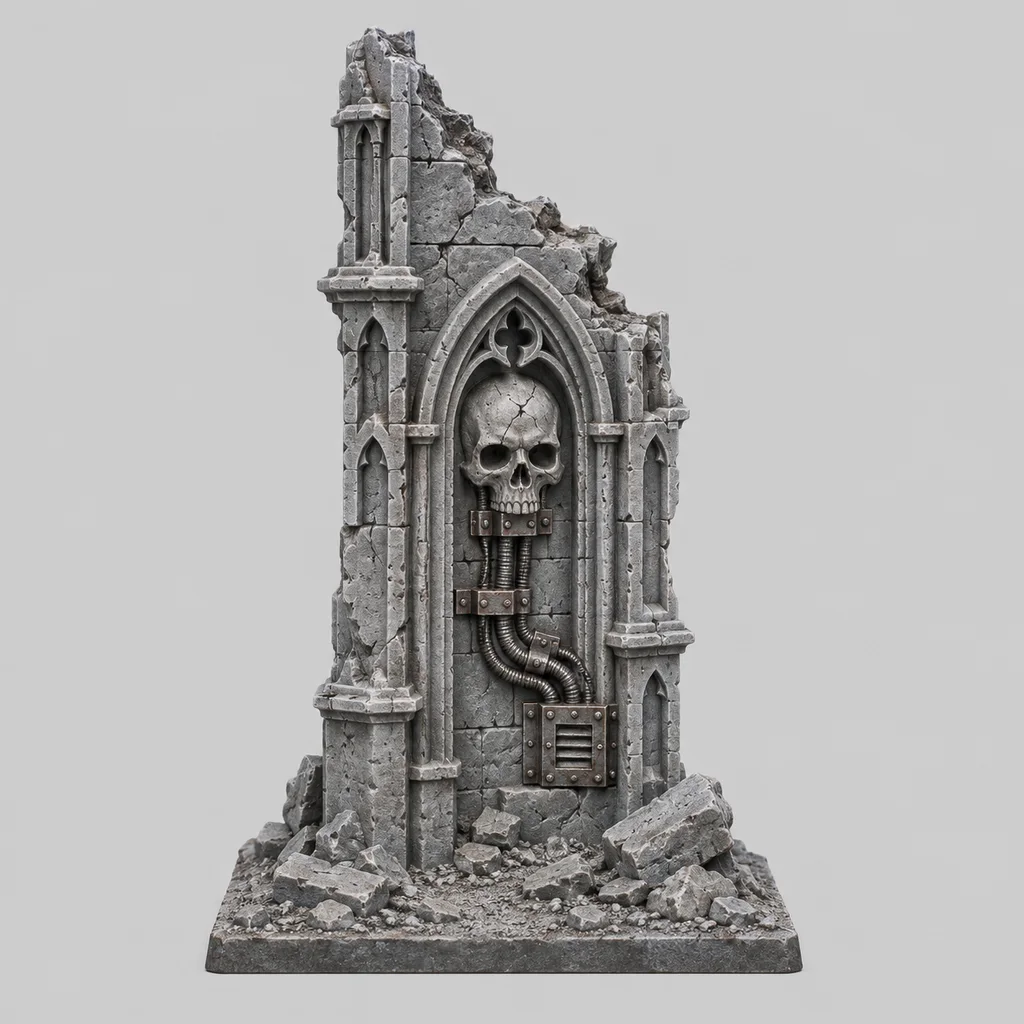
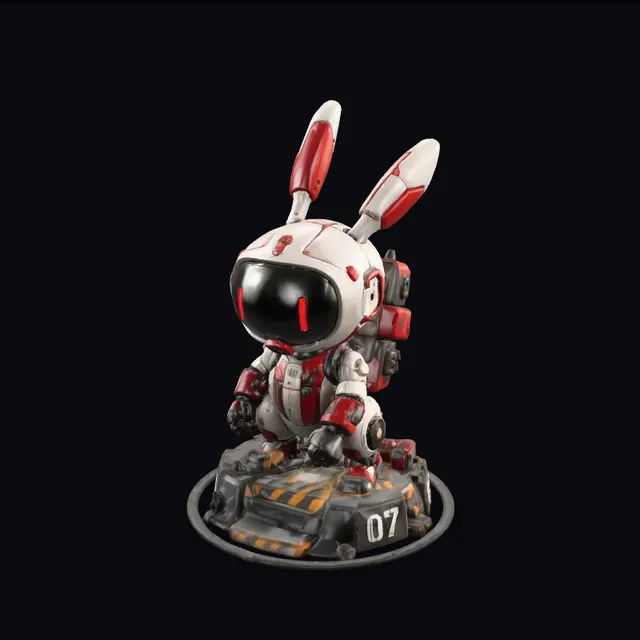
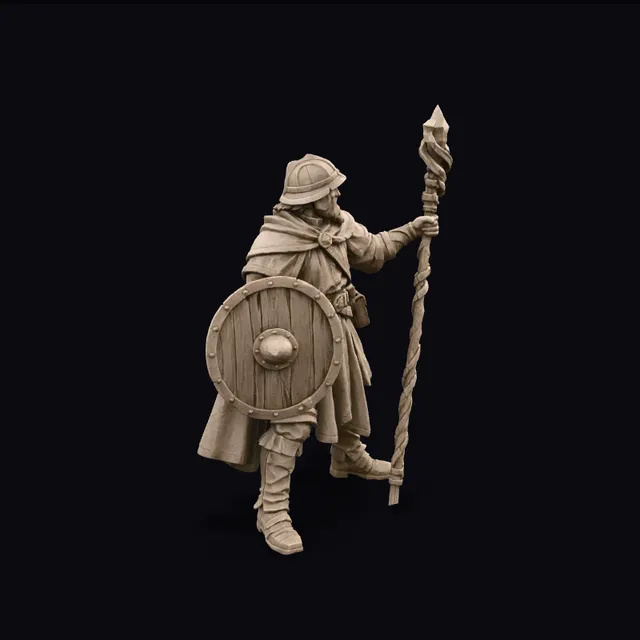
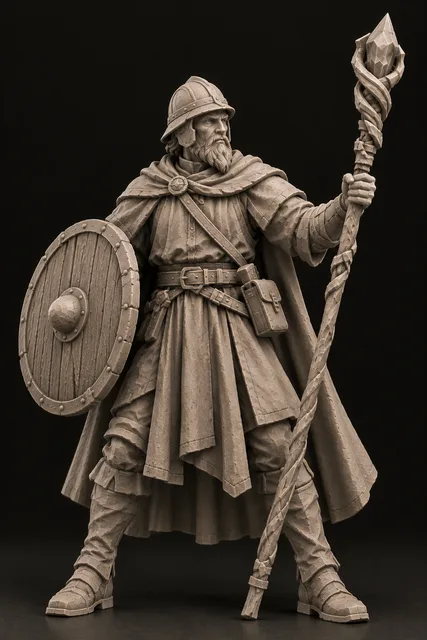
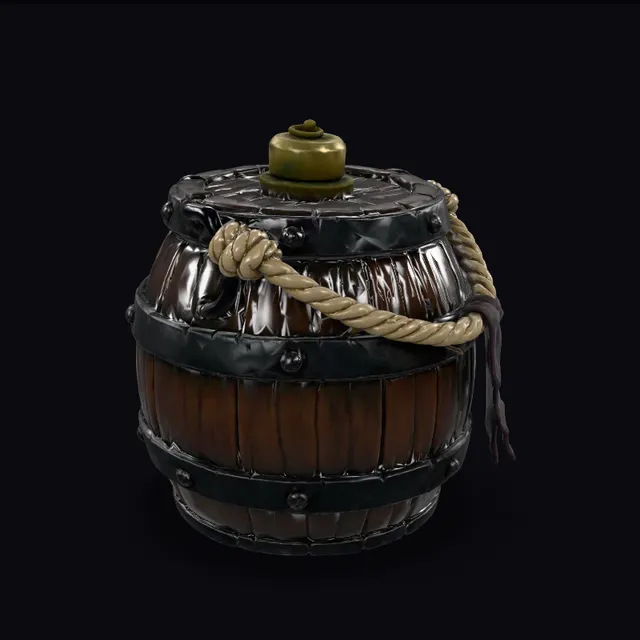
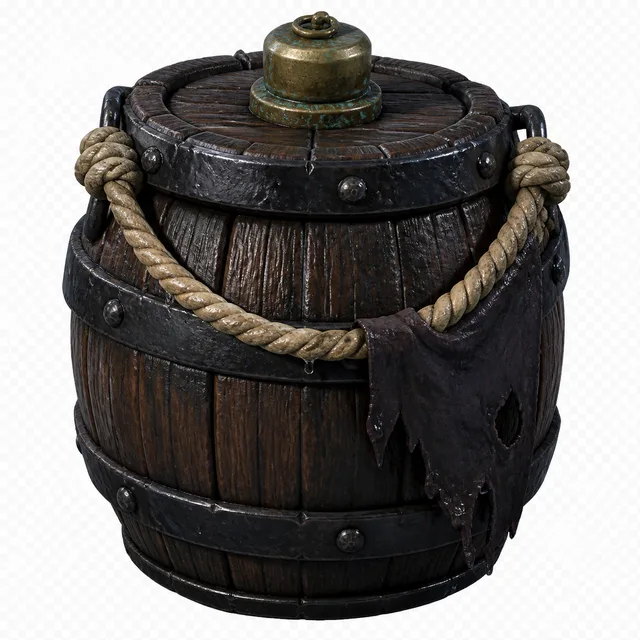
Tabletop figures are sized by heroic scale, roughly 28–32 mm from the feet to the eyes for a human-sized trooper. Ask the agent for the height and let the base set the footprint.
| Model | Height to ask for | Typical base | Notes |
|---|---|---|---|
| Human-sized infantry | 28–32 mm to the eyes | 25–32 mm round | Weapons and hands at least 1 mm thick |
| Armoured elite or hero | 34–40 mm | 32–40 mm round | Bulkier armour, bigger head |
| Large beast or walker | 60–90 mm | 50–60 mm round or oval | Hollow it; drain holes under the base |
| Kitbash head | 4–6 mm tall | None | Print a batch on one plate |
| Terrain and objectives | Any | Your choice | FDM is fine for big pieces |
Compare against a model you already own: stand it next to the slicer preview at the same scale before printing.
Resin is the standard for infantry and heroes. Starting points for standard grey or 8K resin; run your resin's calibration print first.
The agent sculpts what it sees, so for custom Warhammer miniatures the image does most of the work.
Do
Avoid
Every miniature starts as a textured model in full colour, and that model downloads free as GLB on any plan. It is a ready paint scheme.
The print version is the same sculpt with the textures stripped and the triangle count set for your slicer, which is what the clay render here shows. Print it in grey resin, prime it black or grey, and keep the colour model open on a screen beside your painting station.
Want a different scheme? Repaint your concept art in your army's colours before you upload it, and the guide for your custom Warhammer miniatures matches the force you are painting.
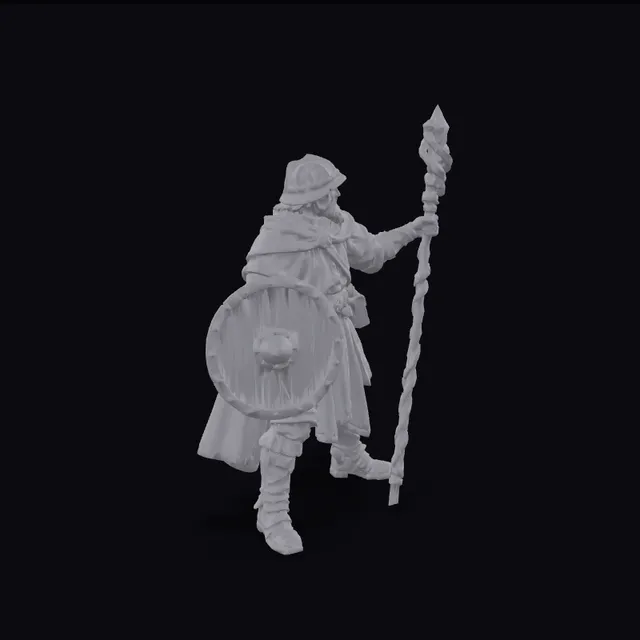
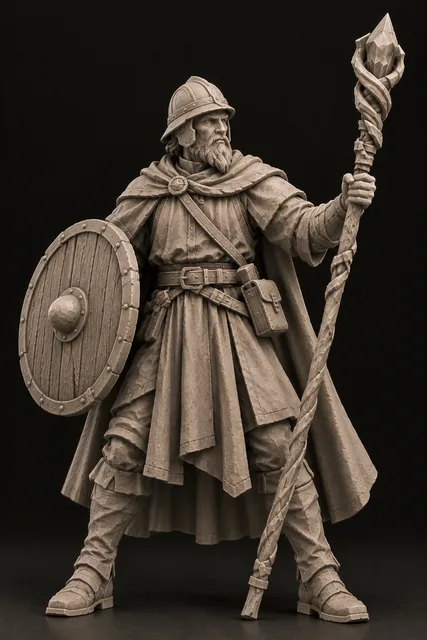
A model costs 3 credits. On Starter ($19 a month for 400 credits, about 130 models) that is roughly 14 cents per miniature, and about 7 cents in the first month, which costs $9. Pro is $29 for 600 credits, about 200 models. Remeshing is free, and a failed job refunds its credits on its own.
New accounts get 3 free credits, one textured model, no card. It downloads free as GLB, so you can judge the sculpt before paying. Your resin slicer needs STL, which comes with a paid plan; see pricing.
Resin for a 32 mm infantry figure is a few millilitres, so a squad of ten custom heads or a unique hero costs very little to print. For a broader guide to resin supports and curing, see resin miniatures.
Check before you play. Official Games Workshop events and some store tournaments may require Games Workshop models, so read the event pack, while most clubs and friendly games accept counts-as and printed models if they are clearly the unit they represent. Ask the organiser first.
Make your own designs. Snapshapy is for your art, not for copying official sculpts or box art, and you can't sell copies of someone else's miniature range. Paid plans include a commercial licence for models you generate from your own images.
The back is predicted. One image shows one side, so the backpack or cloak is the agent's best guess. A three-quarter view helps.
Thin parts break. Antennae, blades and banner poles under about 1 mm snap in resin; ask the agent to thicken them. For pure fantasy minis, the miniature generator is the faster start. For anime-style figures, see anime 3D models.
Yes, from your own art. Upload a sketch, painting or render of your design and the agent builds a textured 3D model in 4–7 minutes. Ask for a print version at 28 to 32 mm and your base size, export the STL and print it in resin. Use original designs; don't upload official box art or another sculptor's models.
For a human-sized trooper, roughly 28 to 32 mm from the feet to the eyes, on a 25 or 32 mm round base. Heroes and armoured elites run a little larger, around 34 to 40 mm. Ask the agent for the height when it remeshes, then compare the slicer preview with a model you already own.
Making the model is free for your first one. New accounts get 3 credits with no card, enough for one textured model, and GLB download is free. Printing needs an STL, which comes with a paid plan. Starter is $9 for the first month, then $19 for 400 credits, about 14 cents per miniature.
Resin for infantry, heroes and anything with a face. At 0.03 to 0.05 mm layers it keeps eyes, armour trim and weapon detail at 32 mm, which FDM can't. FDM is fine for terrain, objectives and large vehicles, where detail matters less and PLA is cheaper and tougher on the table.
It depends on the event. Official Games Workshop events and some store tournaments may require Games Workshop models, so a printed custom figure may not be allowed. Most clubs, campaigns and friendly games accept counts-as models if they clearly represent the unit. Ask the organiser before you build a list around one.
Paid plans include a commercial licence for models you generate, so you can sell prints of your own original designs. You can't sell copies of official miniatures or anything built on someone else's trademarked characters. Keep your source art original and your product names your own.
At 32 mm, a sword or rifle barrel can come out under 1 mm thick, which resin prints but supports and handling snap. Ask the agent to thicken weapons when it remeshes, put light supports along the blade, and remove supports after a warm water soak while the resin is still slightly flexible.
Most models are ready in 4–7 minutes after you upload the image, and the print version takes another short wait at no cost. Supporting it in the slicer takes a few minutes. A plate of 32 mm figures at 0.05 mm prints in roughly two to three hours, whether it holds one model or twenty.
Upload one image of your design. The first textured model is free, and the print version at table scale costs nothing extra.
Upload your art