Free browser tool
Mesh Simplifier: Fewer Triangles, Same Shape
Drop a 3D model, choose how many triangles to keep and this mesh simplifier collapses the rest while holding the silhouette and the texture in place. It runs on your own device in seconds and is free.
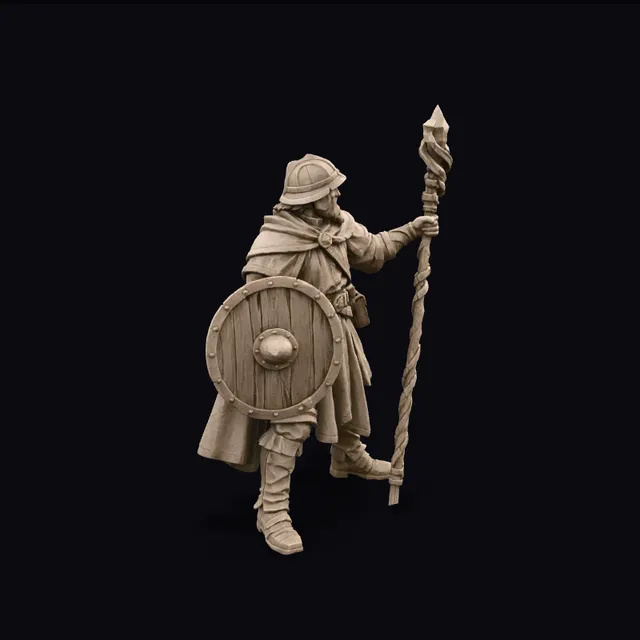 Before
- No upload, no sign-up
- Triangles before and after
- Textures kept, GLB out
How to reduce polygon count in three steps
No Blender, no modifier stack. A recent browser is enough.
- 01
Drop the model
Drag a GLB, glTF, FBX, OBJ, STL, 3MF, PLY, DAE, USDZ or STEP file onto the tool, up to 200 MB. It is opened by the page itself and never leaves your computer.
- 02
Set the target
Tap a preset (Roblox 20,000, VRChat Quest 10,000, VRChat PC 70,000, Web and AR 100,000) or drag the slider to any count; the default is 20,000. Optionally cap textures at 2K, 1K or 512 px.
- 03
Check and download
Compare the wireframe and the shaded view, read the new triangle count, then download the result as a GLB. If a thin part has collapsed, step the target back up and run it again.
What a mesh simplifier actually does
Simplification removes triangles where the surface is nearly flat and keeps them where it bends.
Edge collapse
The tool uses meshoptimizer's quadric-error simplification: it merges the two ends of an edge into one vertex, which removes the two triangles that shared it, and repeats until the count reaches your target.
Error budget
Each possible collapse gets a cost: how far the surface would move. The cheapest ones go first, so flat areas thin out long before ears, fingers or edges do.
UV seams held
Collapses that would distort the UV layout count as expensive too, so texture seams survive and the image still lands where it should instead of smearing.
Same topology type
The result is still a triangle mesh with the original layout of parts. It is lighter, not rebuilt: for clean, even triangles or quads, remesh instead.
Polygon reducer targets by destination
Pick the count by where the model ends up. These are common working budgets, not hard rules, except where a platform enforces one.
| Destination | Typical triangle budget | Why |
|---|---|---|
| Roblox mesh part | Under 20,000 per mesh | Roblox Studio rejects meshes above its limit on import |
| Mobile game prop | 500 to 5,000 | Hundreds of objects share one frame budget |
| Web product viewer | 20,000 to 100,000 | Smooth on phones, detailed enough to zoom |
| Hero character, PC or console | 30,000 to 100,000 | Close-ups, with LODs below it |
| 3D print, 10 cm figure | 100,000 to 300,000 | Below the detail a 0.4 mm nozzle can resolve |
A generated or scanned model often has 300,000 to over 1,000,000 triangles, far more than any of these need.
Reduce polygon count, or reduce file size?
They are related, but not the same. Each triangle costs roughly 20 to 50 bytes of geometry, so cutting a mesh from 500,000 to 50,000 triangles removes several megabytes. Textures do not change at all, so a model with 4K maps can drop 90% of its triangles and still only halve in size.
- If the problem is frame rate or an engine's triangle limit, simplify.
- If the problem is download size, compress the textures with the GLB compressor.
- If it is both, simplify first and compress the result last.
Open the result in the 3D model viewer to check it on its own before you ship it.
Mesh simplifier vs remesh
A mesh simplifier keeps the existing surface and thins it out. The result keeps the texture, but triangles stay uneven: long slivers next to small ones. That is fine for rendering and printing.
A remesh throws the old triangles away and builds a new, even surface over the shape. That is what you want before sculpting, rigging or a clean UV unwrap, but the old UVs, and therefore the texture, do not survive. For low poly game art, simplify a textured model first; remesh only when you will re-texture.
Tips for a clean result
A few habits prevent most broken-looking results from a mesh simplifier.
Do
- Go down in steps and look at the wireframe each time
- Keep more triangles on characters than on boxes; faces and hands need them
- Simplify before you compress, never the other way round
- Keep the original so you can build several levels of detail from it
Avoid
- Push a 1,000,000-triangle scan to 500 in one go and expect the same object
- Simplify a model you plan to remesh anyway; that work is lost
- Judge the result only in the shaded view; holes show up in wireframe
- Expect the tool to fix open edges or flipped normals in the source
Light models straight from a photo
The Snapshapy agent builds a textured 3D model from one photo in 4–7 minutes, and it can remesh its own models to any triangle count you ask for, for free. Ask for "a 15,000 triangle version for Roblox" in the chat and it does it.
New accounts get 3 credits with no card, which is one model, downloadable as GLB on every plan. STL, OBJ, 3MF and USDZ export need a paid plan; see pricing. Start at image to 3D.
- Photo in, textured model out
- Triangle target on request, free
- GLB free on every plan
Frequently asked questions
Is this mesh simplifier free?
Yes. There is no account, no watermark and no cap on files. The mesh simplifier runs on your own computer inside the browser tab, so nothing costs us server time. The practical limit is your device's memory with very dense meshes of several million triangles.
How do I reduce the polygon count of a 3D model?
Drop the model onto the tool at the top of this page, set the target triangle count or percentage, and run it. The page shows the count before and after and a preview with wireframe. Download the lighter version as a GLB. For game work, simplify first and compress textures last.
Will the textures survive?
Yes. The simplifier keeps the UV coordinates and avoids collapses that would tear a texture seam, so the image still maps correctly. At very low targets small details painted across many triangles can stretch slightly. If you need a completely new, even mesh, use remesh instead and re-texture.
Is my model uploaded anywhere?
No. The file is read, simplified and saved inside this page. Nothing is sent to a server, so it is safe for unreleased products, client work and paid assets under a personal licence. Once loaded, the page keeps working without a connection.
Which formats can I open and download?
The tool opens GLB, glTF, FBX, OBJ, STL, 3MF, PLY, DAE, USDZ and STEP files up to 200 MB. The result always downloads as a single GLB with its materials and textures inside. If you need STL or OBJ, open the GLB in Blender or your slicer and export from there; Snapshapy's own models export to STL, OBJ and 3MF on paid plans.
What is a polygon reducer good for?
A polygon reducer makes a model cheaper to draw and smaller to store. Use it to fit a platform limit such as Roblox's per-mesh cap, to keep a mobile game smooth, to build lower levels of detail, or to stop a slicer struggling with a million-triangle scan. It does not clean up messy geometry; it thins what is there.
Why did the triangles drop 90% but the file only halve?
Because the textures did not change. In a typical textured GLB the images are most of the bytes, and simplification only touches geometry. To cut the download size further, run the result through the GLB compressor, which shrinks textures and packs what is left of the geometry.
Related tools
Reduce your polygon count now
Drop a model into the mesh simplifier at the top of the page. It never leaves your computer.