Short answer
Can ChatGPT make 3D models? The short answer
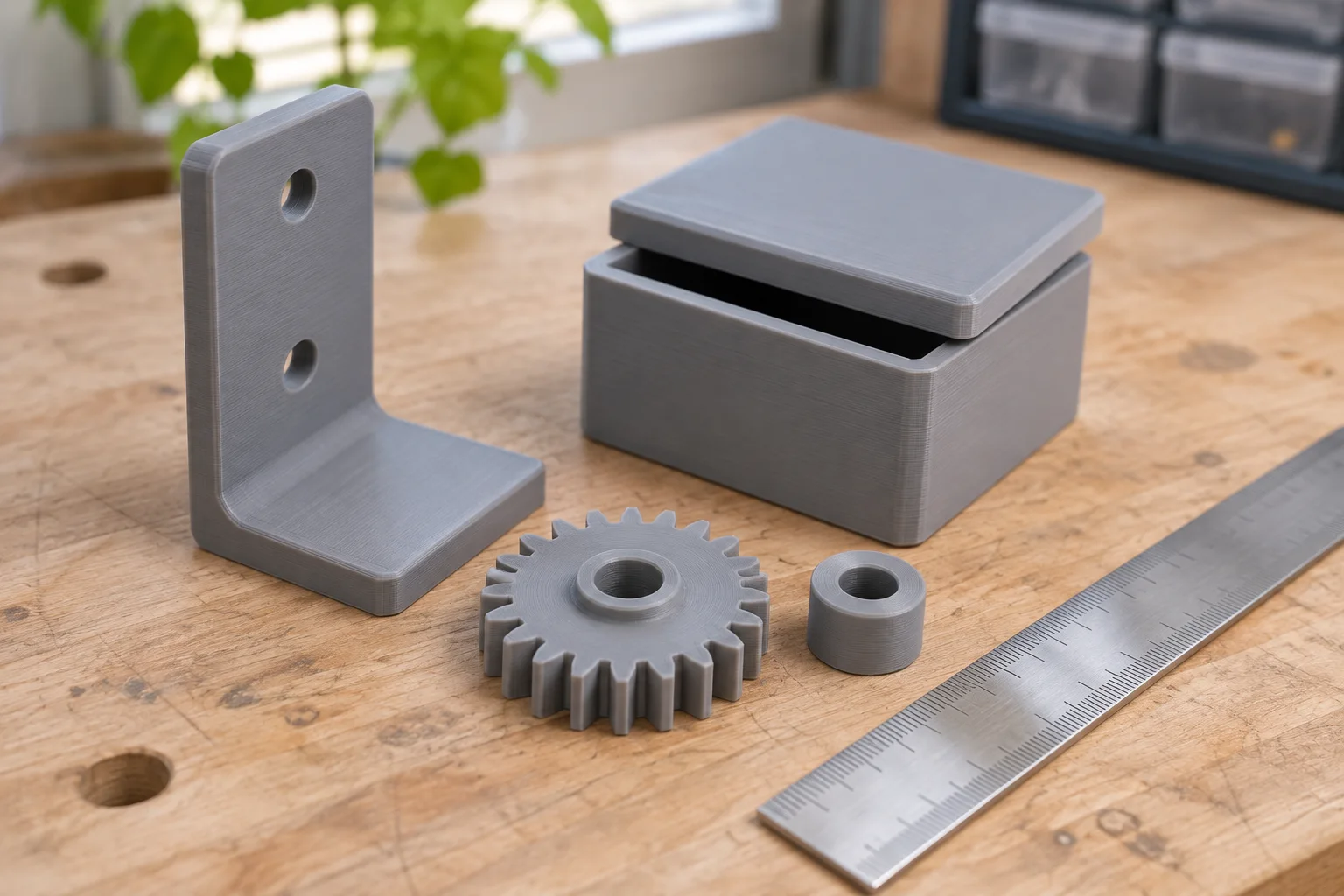
Yes, but only the kind you can describe with numbers. ChatGPT can write an OpenSCAD script for a bracket, a box with a lid or a gear, and you render that script into an STL. It can write a Blender Python script that builds a low-detail scene from cubes, cylinders and curves. In chats where it can run code, it can even write a simple STL file directly.
What ChatGPT does not do is return a detailed, textured mesh of a dog, a face or a dragon as a native answer. Organic shapes need millions of surface decisions, not a short script. So can ChatGPT make 3D models you would print as a figurine or drop into a game? Not on its own; for that, its image output becomes the input for an image-to-3D tool.
Contents10 sections
What a ChatGPT 3D model can and can't be
Judged by the file you end up with, not by what the chat says it made.
| Job | Works? | How | What to expect |
|---|---|---|---|
| Functional print part (bracket, spacer, box) | Yes | OpenSCAD script | Exact dimensions after a few rounds of fixes |
| Simple blocky scene or low-poly prop | Yes | Blender Python script | Primitive shapes, no texture detail |
| Basic STL file in the chat | Sometimes | Code tool writes the file | Cubes, cylinders, simple solids only |
| Figurine, pet, character | No | Image, then an image-to-3D tool | Code cannot describe the surface |
| Textured game asset | No | Image, then an image-to-3D tool | Needs a mesh with UVs and a texture |
| Concept art of the object | Yes | Image generation | A good input for an image-to-3D tool |
Method 1: ChatGPT plus OpenSCAD for printable parts
The strongest ChatGPT 3D model workflow. OpenSCAD is a free program that builds solids from code, so the model is only as good as the numbers you give.
Describe the part with measurements
"Write OpenSCAD code for a wall bracket: 60 mm wide, 40 mm deep, 4 mm thick, two 5 mm screw holes 40 mm apart, a 3 mm fillet on the inner corner. Use variables at the top."
Paste and render
Open OpenSCAD, paste the code, press F5 to preview and F6 to render. Errors appear in the console; paste them back into the chat and ask for a fix.
Iterate on the shape
Ask for one change at a time: thicker walls, a chamfer, a countersink. Variables at the top let you change sizes yourself without another round.
Export the STL
After F6, use File > Export > STL and open it in your slicer. Check it in the STL viewer first if you want to see the triangle count and size.
Method 2: ChatGPT writes a Blender Python script
Blender runs Python in its Scripting workspace. ChatGPT knows the bpy API well enough for simple scenes.
Ask for a script, not a model
"Write a Blender 4 Python script that builds a low-poly lighthouse from cylinders and cones, 10 m tall, with red and white materials."
Run it in Blender
Open the Scripting tab, create a new text block, paste the code and press Run Script. Errors print in the system console or the Info editor.
Fix and extend
Paste error messages back. API names change between Blender versions, so say which version you have.
Edit by hand
The script gives you a starting layout. Real detail still comes from modelling or sculpting, or from importing a generated mesh, as in the Blender image to 3D guide.
Method 3: a ChatGPT image, then a real 3D model generator
For anything organic, use ChatGPT for what it is good at: pictures. Ask it for a clean concept of one object, then turn that image into a mesh with a tool built for it.
Prompt for an image that converts well: "one character, full body, front three-quarter view, standing, plain light-grey background, soft even light, nothing cropped at the edges." Busy scenes, several characters or dramatic lighting make worse 3D input.
Then upload the picture to image to 3D. The Snapshapy agent builds a textured model from it in 4–7 minutes for 3 credits, with the back and sides filled in. You can also skip the separate image and describe the object to the agent directly in text to 3D; it draws the concept itself for 2 credits first.
Why ChatGPT can't make detailed 3D models
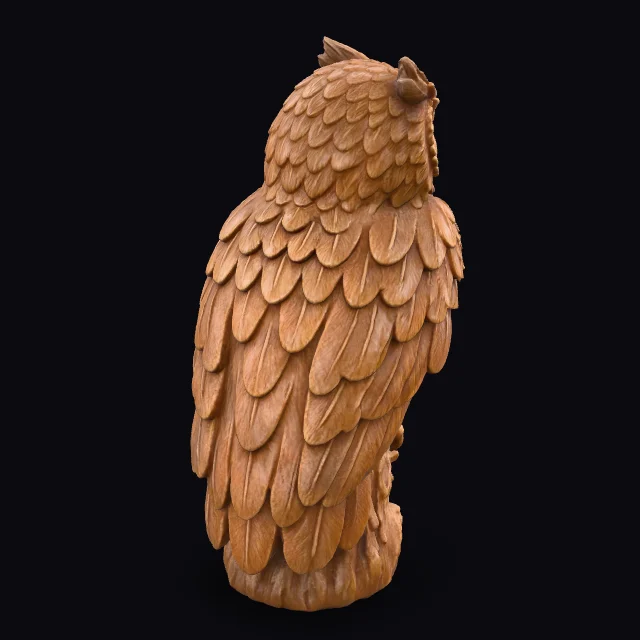
A detailed figurine is a surface of hundreds of thousands of triangles, each placed in space, plus a texture image mapped onto it. A language model writes that out one token at a time, and a short script can only describe shapes that have a formula: boxes, cylinders, spheres, extrusions, unions.
So the shape you get from ChatGPT code looks like what it is: assembled primitives. That is perfect for a spacer that must be 12.5 mm thick and useless for a cat.
Dedicated image-to-3D tools are trained on 3D shapes and output the mesh and texture directly. They are worse at exact dimensions, which is why the two kinds of tool complement each other: code for precision parts, generation for organic forms.
ChatGPT 3D model generator workflows vs a dedicated generator
Can ChatGPT make 3D models that match a purpose-built tool? Depends on the job. Side by side:
| ChatGPT + code | Image-to-3D generator | |
|---|---|---|
| Best at | Precise functional parts | Characters, pets, props, figurines |
| Dimensions | Exact, set in code | Approximate; you scale after |
| Texture | None, or flat colours | Full colour texture |
| Output | Code you render into STL | GLB, plus STL/OBJ/3MF on paid plans |
| Your skill needed | Read errors, run OpenSCAD or Blender | Pick a good photo |
| Time per object | Minutes to hours of back and forth | 4–7 minutes for most models |
Prompting tips for ChatGPT 3D code
Most failed scripts come from vague prompts. Treat it like a drawing for a machinist.
What image-to-3D produces that code can't
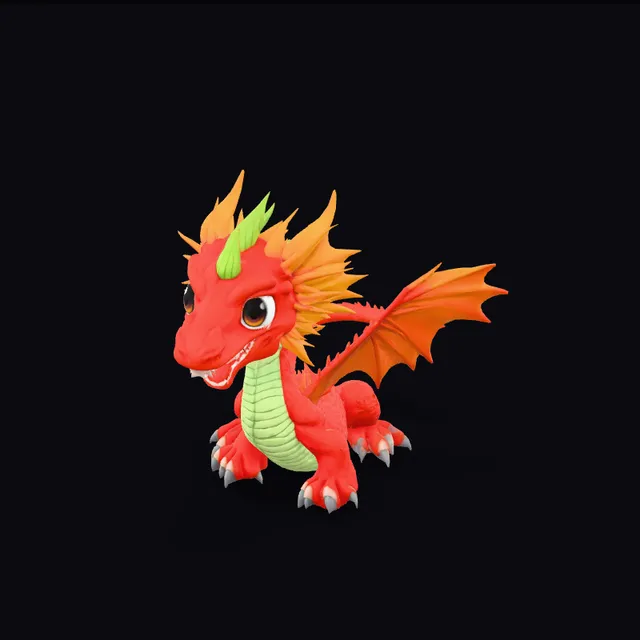
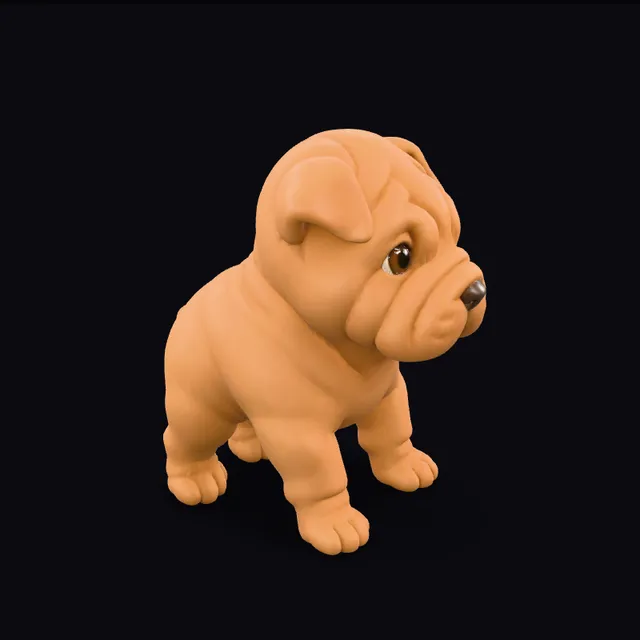
Organic surfaces like these come from a generator, not a script. Each started as one picture.
Questions people ask
Can ChatGPT make 3D models for 3D printing?
For simple functional parts, yes. Ask it for OpenSCAD code with exact millimetre dimensions, render the code in OpenSCAD and export an STL for your slicer. Expect a few rounds of fixes. For figurines, pets or characters, code is the wrong tool: generate an image, then turn it into a mesh with an image-to-3D tool and export STL from there.
Can ChatGPT create an STL file directly?
In chats where it can run code, it can write a simple STL file, such as a box, a cylinder or a basic vase, and offer it for download. The geometry is only what a short script can describe. Always open the file in a viewer or slicer before trusting it. For detailed shapes, use OpenSCAD for parts or an image-to-3D generator for organic objects.
Is there a ChatGPT 3D model generator?
Not as a built-in feature that returns a textured mesh. ChatGPT outputs text, code and images. The practical ChatGPT 3D model generator workflow is to have it write code for simple shapes, or to create a concept image and pass that image to a dedicated image-to-3D tool, which outputs the textured model as a GLB or STL.
Can ChatGPT turn a photo into a 3D model?
It can describe the photo, write code that roughly imitates simple shapes in it, or redraw it as a cleaner concept image. It does not reconstruct the photo into a textured mesh. For that, upload the photo to an image-to-3D tool. In Snapshapy a textured model costs 3 credits and most are ready in 4–7 minutes; new accounts get 3 free credits.
Can ChatGPT make 3D models in Blender?
Indirectly. It writes Python scripts using Blender's bpy API, which you paste into the Scripting tab and run. That works well for layouts, simple props, arrays and procedural patterns built from primitives. Say which Blender version you use, because API names change. Detailed sculpted forms still need sculpting, modelling or an imported generated mesh.
Which is better for 3D models: ChatGPT or a dedicated AI 3D tool?
They suit different jobs. ChatGPT with OpenSCAD is better for precise mechanical parts where every millimetre matters. A dedicated image-to-3D tool is better for anything organic or textured: characters, animals, toys and props, made in minutes from one picture. Many makers use both: code for the bracket, a generator for the figure that sits on it.
Why does ChatGPT's OpenSCAD code fail to render?
The usual causes are made-up functions that OpenSCAD does not have, missing semicolons or brackets, and shapes that only touch at an edge so the union is not a clean solid. Paste the exact console error back into the chat, ask it to use only built-in OpenSCAD modules, and overlap joined parts by a fraction of a millimetre.
Can ChatGPT make 3D models for games?
It can write code for blocky, low-poly or procedural geometry, and scripts for engines and Blender. It does not produce a textured, UV-mapped character or prop ready for a game. For those, generate a concept image or use a photo, turn it into a textured GLB with an image-to-3D tool, and import that into your engine.
Code can't sculpt a dragon. A ChatGPT 3D model generator workflow can.
Describe the object and the agent draws a concept for 2 credits, then builds a textured model for 3 more, most ready in 4–7 minutes. A picture ChatGPT drew works as input too.